
Summer Book Moves
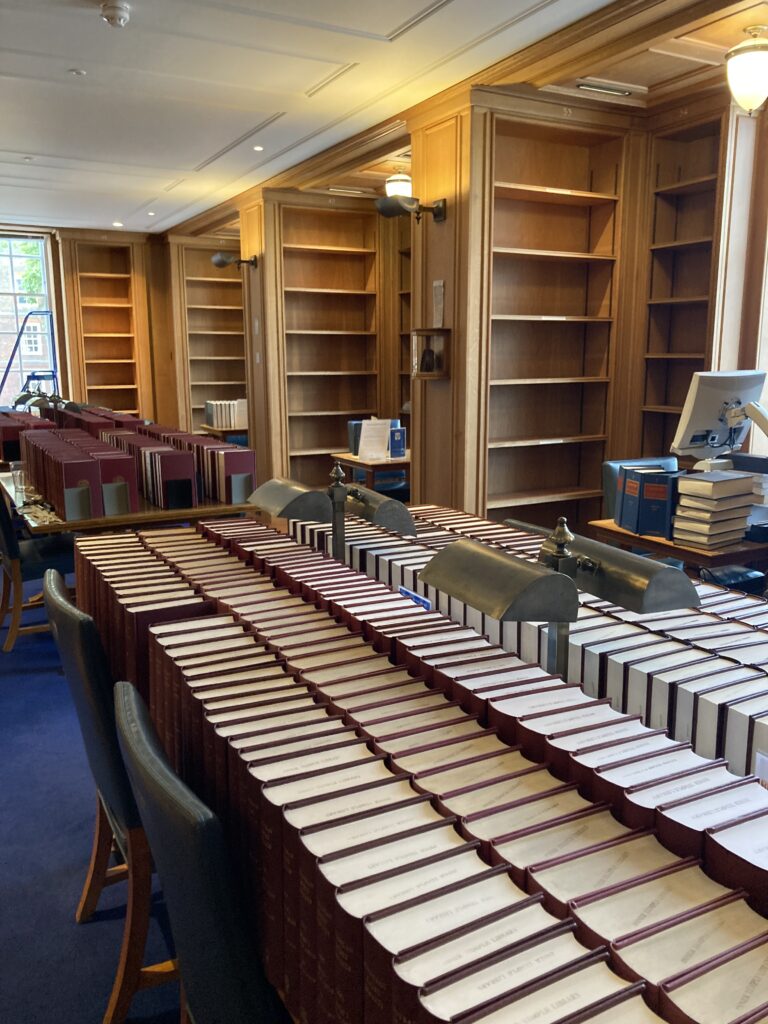
Members returning to the Library after our summer closure will notice that some of the core collection has been moved to make more space for growth, and to consolidate some of the collections. These changes involved moving over half a kilometre of books – more than enough to cover the entire length of Fleet Street – during the two weeks when the Library was closed.
We no longer have separate collections for European Union, International Law, Human Rights and Medical Law. The materials from these collections have been integrated into the main textbooks, journals and law reports collections.
Legislation is now on the North side of Room C, and Law Reports are now shelved on the East and South sides of Room C as well as in Room D. Textbooks remain in Room A, and Journals can still be found in Room B and the Lift Lobby.

Our New Graduate Trainee Librarian
 At the beginning of August I had the privilege of joining the team at the Inner Temple Library as the Graduate Trainee Librarian. Having grown up in rural Wiltshire, being in London has been a big adjustment (the views while I walk across Waterloo bridge are not going to wear off for a long time) but the warm welcome I’ve received from the staff, and getting to work in such a beautiful environment, have made the past three weeks fantastic.
Before starting at the Inn I studied History and Politics at the University of Warwick where I developed a deep appreciation for the information, service, and environment a library can provide. After graduating I worked in public libraries where I collected not just a wealth of experience but also many, many stories – if you ever spot me at the Enquiry Point do ask me about the man with the plastic dinosaurs (if you dare…). In my summer jobs I’ve developed a range of skills, from transcribing 100-year-old borstal records to fitting school shoes; I think some may be more useful here than others!
Joining the Library during the summer period has been particularly interesting. Getting involved in book moves has left me more than a little achy (I didn’t realise I was signing up for such a physical role) but it has really helped my familiarity with the collection, while all the talk of Hall lunches is building my excitement for September. As I don’t have a background in law the other members of staff here have been stretching my brain with legal knowledge; it’s really exciting to be working alongside and learning from the experts, and I can’t wait to apply what I’m learning now over the next few years and contribute to the excellent service the Library offers.
The Red Barn Murder and Anthropodermic Bookbinding
It was recently reported that Moyse’s Hall Museum in Bury St Edmunds had discovered that they had not one, but two books bound in human skin. A copy of an account of the trial of William Corder, hanged for the murder of Maria Marten in 1828, had been on view at the museum since 1933, but the second book was found in one of the museum’s offices. It was common practice for the body of an executed murder to be anatomised, and this book had been donated to the museum by a family with connections to the surgeon who carried out the dissection.
The Corder case, known as the Red Barn murder after the location where the body was discovered, attracted sensational interest. Several accounts of the trial were published and, as was common at the time, a number of broadside ballads were produced. Tom Pettitt of the University of Southern Denmark has identified nine distinct ballads, two of which were later recorded by folk song collectors, one of them as far away as New South Wales.
The Library’s Trials collection includes three contemporary accounts of Corder’s trial. Fortunately, none of these is in an anthropodermic binding.
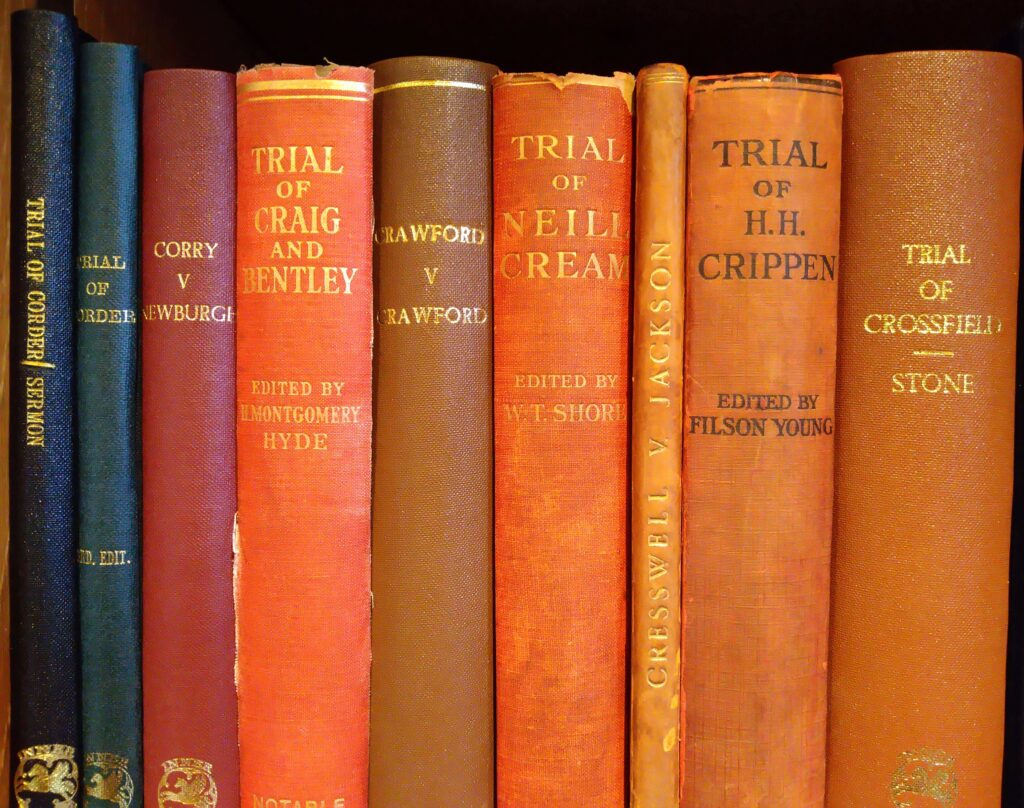
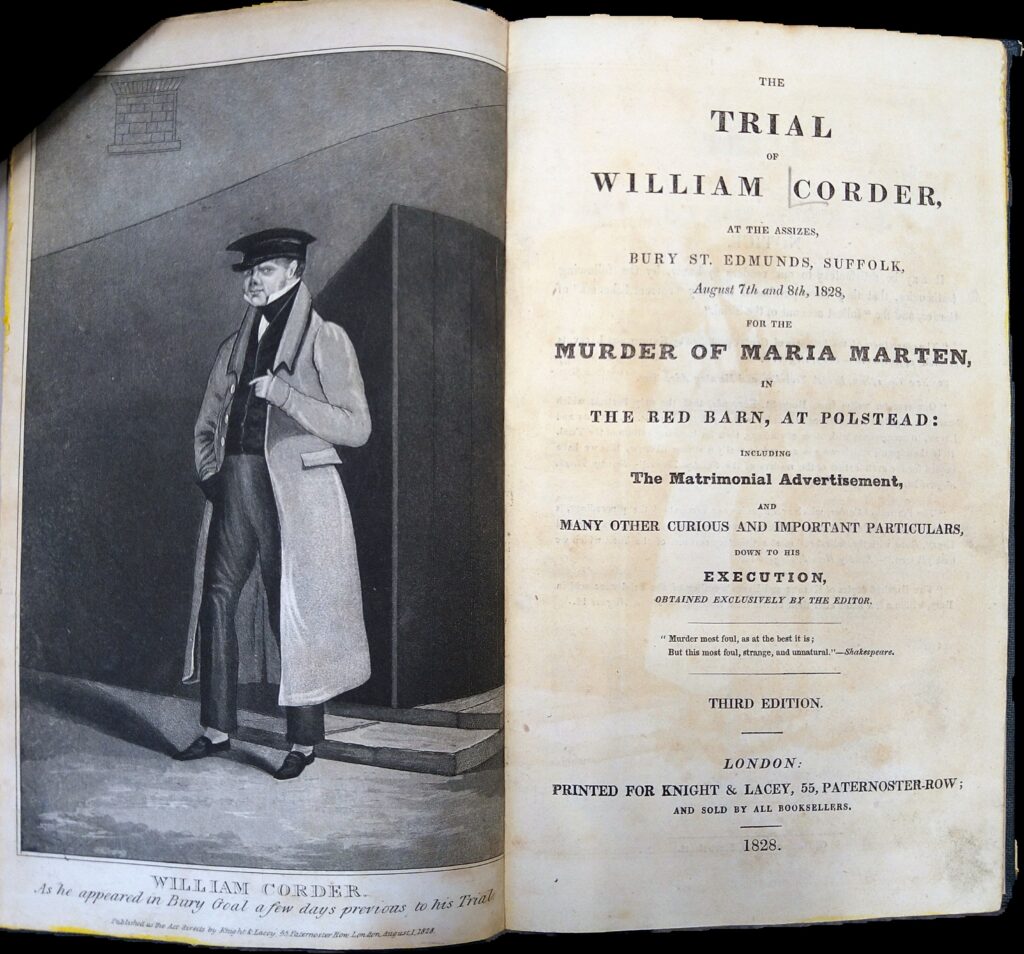
The Trial of William Corder. Book held by the Inner Temple Library.
BIALL Conference 2025
This summer I attended the annual conference of the British & Irish Association of Law Librarians, which took place in Birmingham between 11 and 13 June. The programme included plenary sessions as well as shorter parallel sessions and lightning talks, covering topics such as research skills training, AI innovation and utilisation, horizon scanning, and finding legal information from other jurisdictions.
Many of the sessions this year focused on AI, a topic that is growing in relevance worldwide, and raises many questions on both its potential and its risks. One of the most interesting talks on this topic was the keynote lecture from Christina Blacklaws, former president of the Law Society, titled “AI & Bias: Ensuring Fairness in a Technological Age”. Christina’s talk looked at how AI risks perpetuating discrimination if it is trained on data that reflects historical biases and exclusions. Armed with statistics about the lack of diversity in spaces like Silicon Valley, where decisions on how AI is being trained are made, Christina discussed the real-life consequences of deploying biased AI systems. She went on to examine what ethical AI could look like, arguing for a process of developing and improving AI that includes transparency, accountability, diversity/inclusion, and auditing. Christina talked about the importance of “keeping the human in the loop” when it comes to deploying and developing AI systems, and ended with a call to action to champion interdisciplinary collaboration in AI development, advocate for human oversight, and foster a culture of transparency with regard to how AI is trained and how decisions are reached.
The Inner Temple Library also contributed to the conference programme, with our Senior Library Assistant James Rowles and former Deputy Librarian Tracey Dennis organising a talk called “The British Virgin Islands: the Gateway to Commonwealth Caribbean Case Law and Legislation”. Opening with a ‘lightning round’ flag quiz, which proved very popular, they went on to discuss the context and history of BVI and why this is important when doing legal research. They then looked at complications that arise when it comes to researching BVI and how to overcome them, sharing useful resources along the way.
Visit to The National Archives
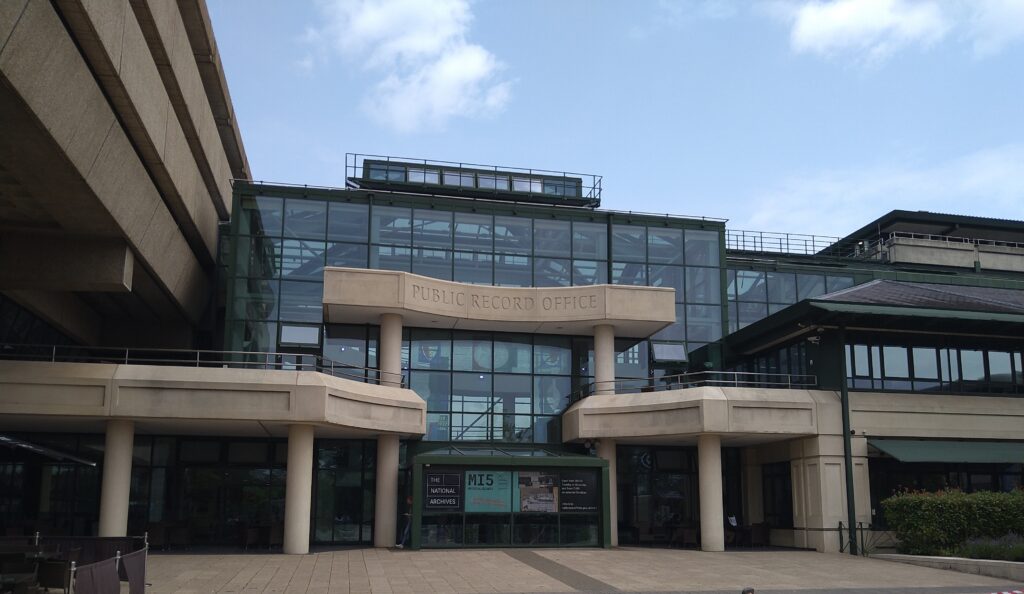
The Library Assistant and the Library Administrator visited The National Archives in June, along with colleagues from the other Inn Libraries. We arrived at the modern but rather beautiful building on a Monday morning, and were greeted by Dan and Charlotte, two of the Archivists.
There are nine repositories in the building covering all eras and topics. The building is split into two sections (effectively two buildings joined together) with one side split into North, South, East and West, and the other side into areas A, B and C. The most recent consignment of archives to arrive for sorting and cataloguing are from the Ministry of Defence; it includes material from the first and second world wars.
We were shown around the first half of the building, each floor or area of which covers a different type of material, for example maps or plans of aviation equipment. We learned that The National Archives (TNA) have an off-site store as well, in a salt mine in Cheshire. Materials are brought to London, and returned, two or three times a week.
Our hosts explained that though TNA have originals or copies of everything from the former Public Record Office, they do not necessarily hold a document if it is owned by an individual, as it is classed as a personal possession so does not fall within their collection criteria. In instances where they have acquired such material, it may end up in a different location to the rest of the items in a given subject class. TNA are undertaking a large project aimed at tying the public and personal records together.
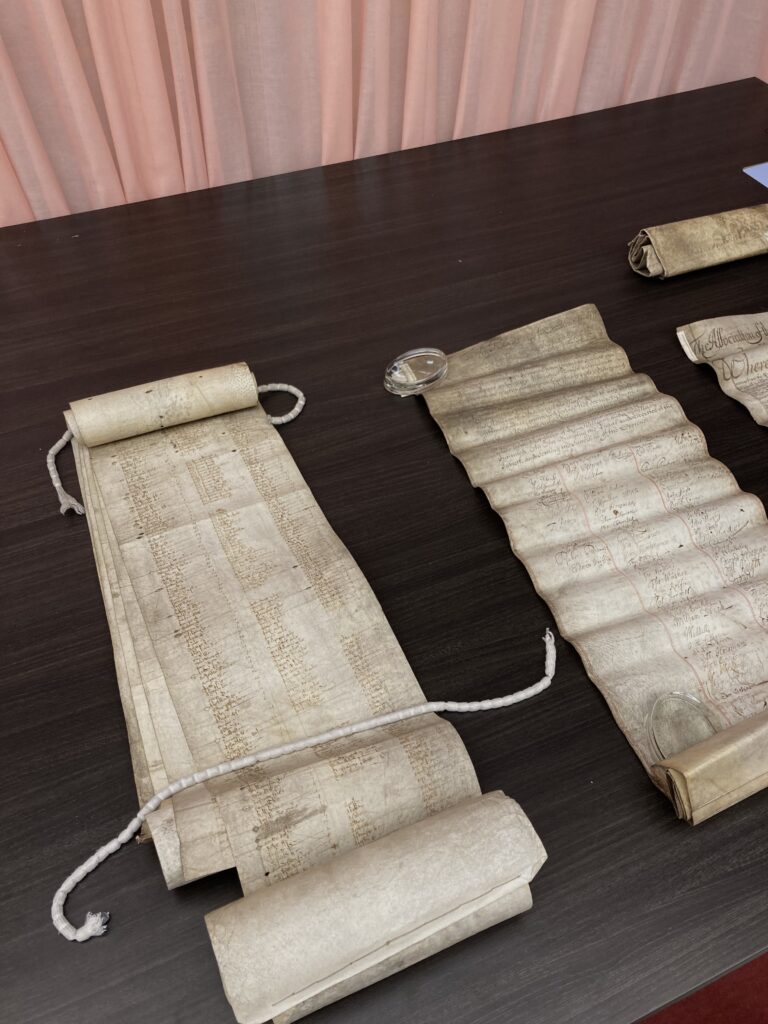
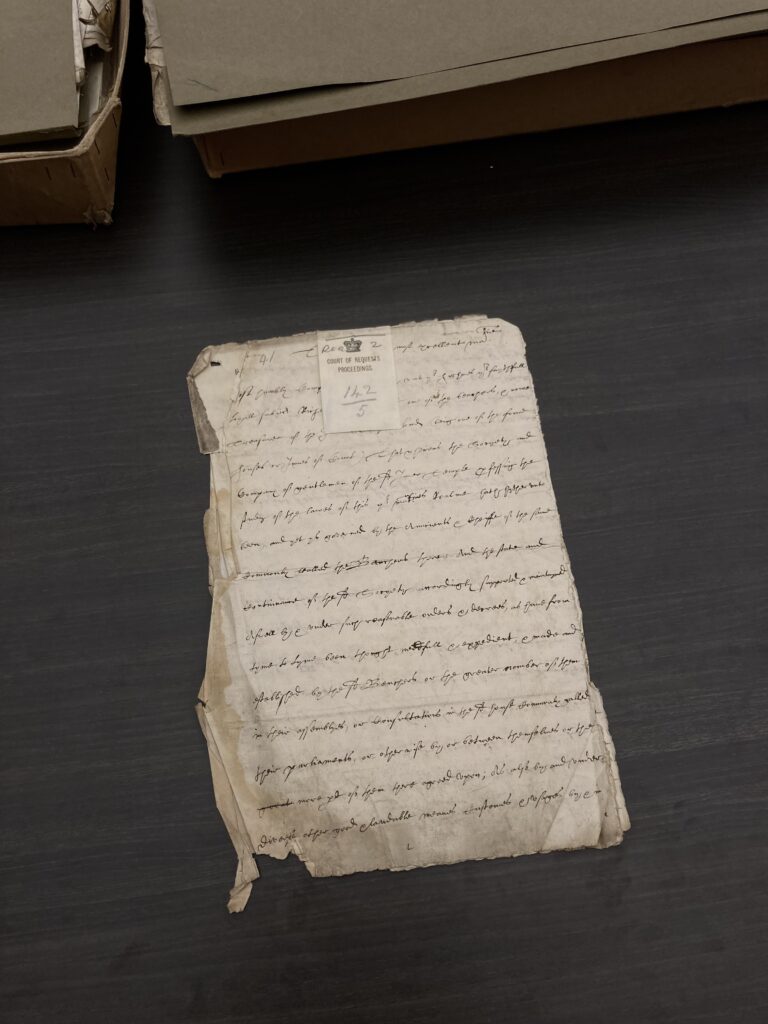
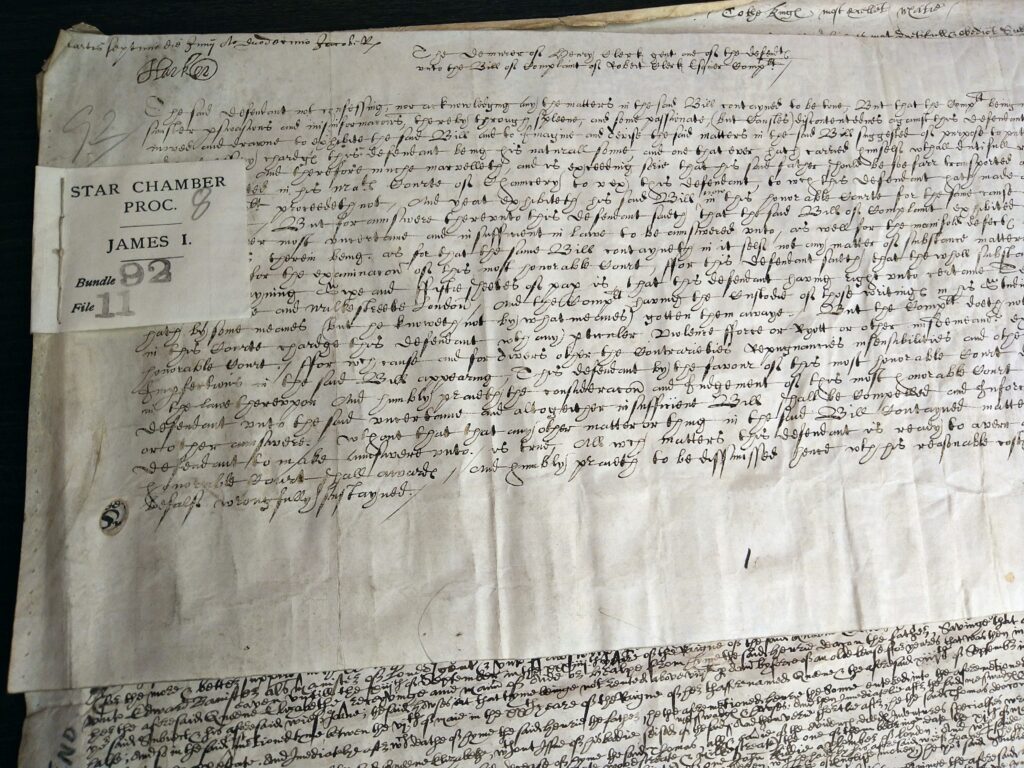
We were then taken to the other side of the building into the newer section, which was much lighter and airier, where we were shown a display that Dan had put together for us. There were items about all four Inns of Court, including an Association Oath Roll from 1697, on which all members of each Inn and all Members of Parliament had to register their names in order of precedence; and the case of a Treasurer of the Inner Temple complaining about the Reader not paying the drinks bill at an event.
Dan and Charlotte are keen to advertise the legal documents held at TNA, which can be used for many different purposes – not just researching your family tree.
South Asian Dinner
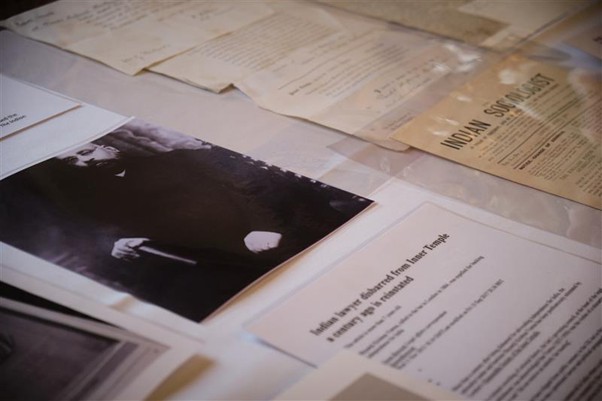
On 4 June, the Inn celebrated South Asian Heritage month early, by hosting a South Asian Dinner. The Archive contributed to the pre-meal entertainments by setting up a display of the Inn’s historic treasures relating to the Inn’s famous South Asian members. Guests pored over the three tables of admission records, Call to the Bar papers, publications and photographs of members such as Bhicoo Batlivala, Ma Pwaa Hmee, Nehru, Jinnah, Krishna Varma and, arguably the most famous of the Inn’s Members, Mahatma Gandhi. Guests could also see Gandhi’s bust, looming guardian-like over the Inn’s historic records.
The display encompassed members from India, Pakistan, Sri Lanka, Bhutan and Burma, representing a wide range of professions, from barristers to Prime Ministers, poets, journalists and school founders. All of them pushing the boundaries in their professions and thought-provoking to this day.
After viewing the material and having a glass to drink, the guests sat down to their meal, dining in the knowledge that they are the next generation of a long line of South Asian members, some of whom have gone on to change the world.
By Umut Kav, Assistant Archivist
