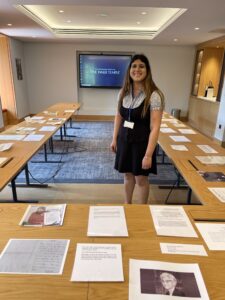
Library Tours for Bar Students
Get to know the Library and the services available to you with a short, practical introduction from library staff.
These 30-minute tours are exclusively for student members of the Inns of Court. Tours are designed to give you a quick orientation so you can make confident use of the Library, its collections and its facilities. Book online.

New Library Zones
In response to user feedback, the Library is introducing a new zoning system to establish Silent, Quiet, and Conversation spaces. This will be in place from September, and we hope it will ensure that all Library users can access a working environment suited to their needs. If you have any questions, please email us at library@innertemple.org.uk, or ask at the Enquiry Point.
 (New) Member of Staff
At the start of July 2026, I made the wonderful return to the Inner Temple Library after 15 months at the Law Society as their Assistant Librarian (Collections). Some users and colleagues may remember me as the Library’s first Graduate Trainee, a role which I started during the topsy-turvy times of the Library’s reopening after Project Pegasus. I’m now back at the Inn as the Assistant Librarian (Acquisitions), where I will be bringing my experience and insight as a previous Graduate Trainee and as an Assistant Librarian at a similar organisation to manage and develop the Library’s document supply service, loans scheme, and print and digital collections, amongst other things. It’s great to be back and I look forward to meeting some new (and familiar) faces soon!
AI and Case Preparation
The latest edition of the Opinion Writing and Case Preparation manual includes a new section on artificial intelligence in legal research, written by our Reader Services Librarian, Sally McLaren. This is the first time the manual has addressed AI in substantial detail, reflecting its growing relevance to legal research and professional practice.
The section focuses on understanding the limitations and risks of generative AI rather than promoting it as a replacement for established research methods. As tools evolve, the underlying principles remain the same: research must be rigorous, reliable and authoritative, and the Inn Libraries are best placed to help you achieve that.
Special Collections Exhibition
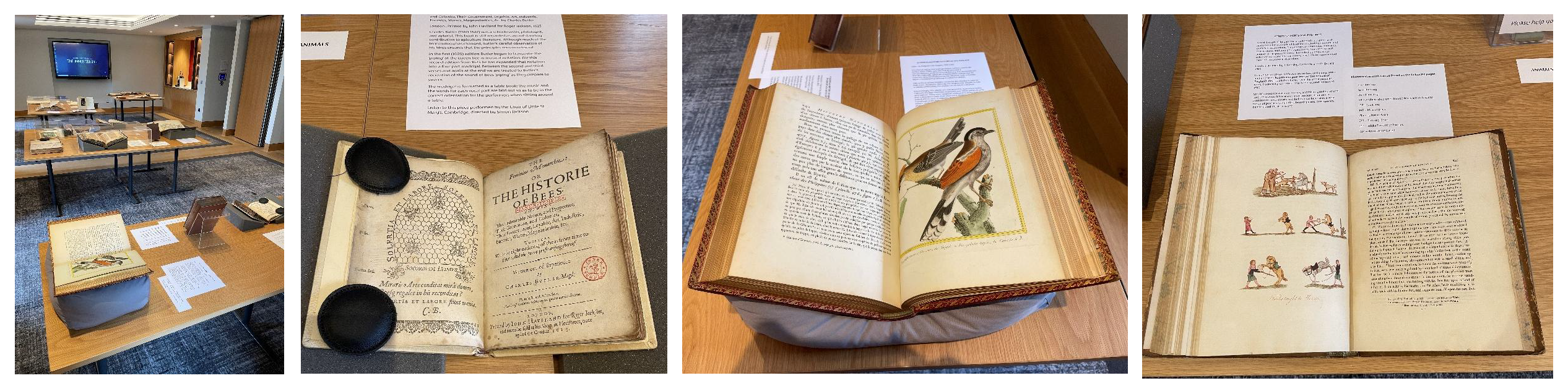
Hidden among the mountains of legal textbooks and law reports, little known to the regular user, the Library has a treasure trove of rare, beautiful, interesting, and sometimes weird items that form our special collections. In July we displayed a handpicked selection of items from these collections for one night only: effectively our first ever exhibition open to all members.
Visitors were greeted by four members of staff who had each curated a table around a theme: Literature, Early Legal Works, a Library Odyssey, and Animals. My table, Animals, was designed to bring a little levity to the exhibition, as I displayed doodles, illustrations, engravings, and hand-painted pictures of critters featured in our collection. Of particular interest to our visitors was the The Feminine Monarchie : or, the Historie of Bees Shewing their Admirable Nature, and Properties, their Generation and Colonies, Their Gouernment, Loyaltie, Art, Industrie, Enemies, Warres, Magnanimities, &c. by Charles Butler (snappy title, I know!) a book from 1623 detailing Butler’s close observation of bees. In the first edition, dated 1609, Butler began to transcribe the sounds of a queen bee ‘piping’; for the second edition he developed this into a four-part madrigal, a performance of which can be found on YouTube.
The exhibition was well attended and (we hope) enjoyed by all who came. We will be running another in the Michaelmas term: please sign up to be contacted once the details are released.
BIALL Training
By Jessie, Graduate Trainee Librarian
In August I visited the Squire Law Library in Cambridge for a full day of training on legal research materials provided by BIALL (British and Irish Association of Law Librarians).
Following a brief introduction to the English legal system the day was split in two. The morning was focused on legislation, with the afternoon tackling case law. Each session was accompanied by some quite challenging questions and an opportunity to talk through any areas of concern. The trainers were a real font of knowledge and although it was impossible to cover everything in one day, they made sure we were equipped with the most important item in a librarian’s toolbox: a huge bank of resources.
The day was a fantastic opportunity to consolidate everything I’ve learned over the past year of my traineeship as well as identify and fill in some gaps. Thank you to BIALL for running the event!
Rarebytes: Five Centuries of Library Rules
As we start the new term it seems appropriate to look at the Library rules and regulations, but of course this corner of the Newsletter is for those of an antiquarian bent (and perhaps an occasional time traveller).
Selected Inner Temple Library Rules through the Ages:
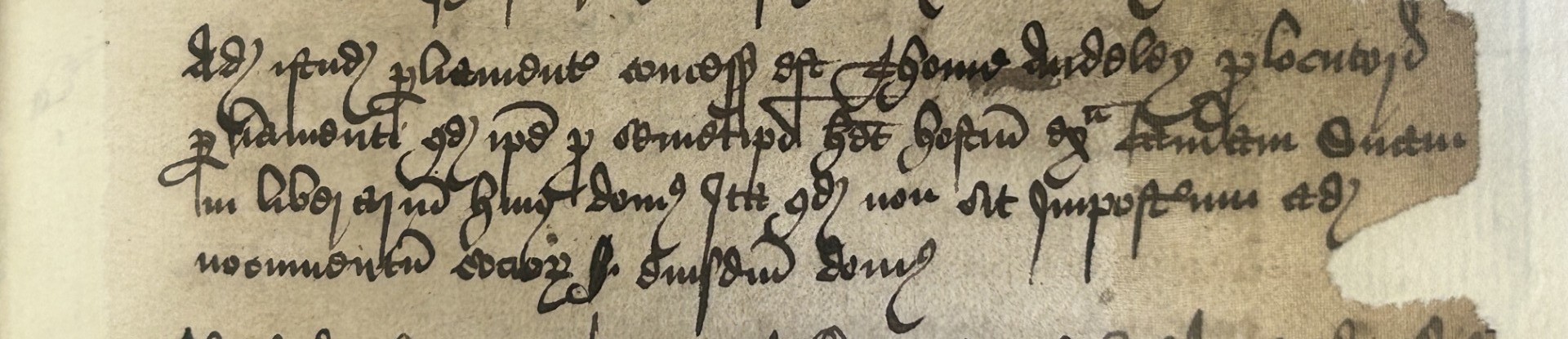
1530 – Consideration for library users has always been important. At a Parliament held on All Souls Day 1530 Mr Audley (later Lord Audley) was permitted a to install a door from his chamber which opened into the Library on the understanding that: “it be not hereafter to the nuisance of the members” [Acts of Parliament 1505-1589 PAR/1/1]
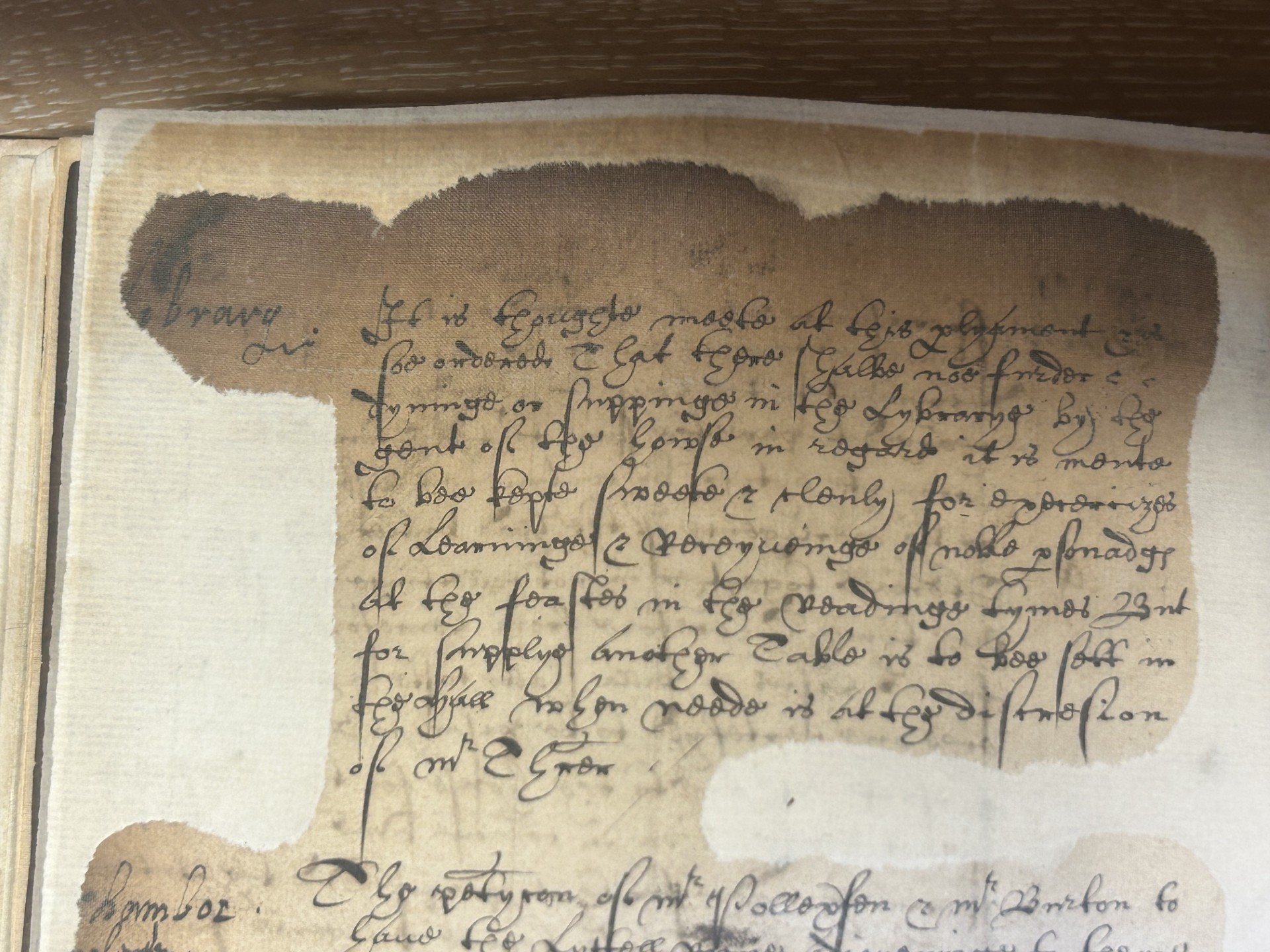
1606 – Ever eager to ensure an environment conducive to study, Parliament ordered:
“that there should be no further dining or supping in the library by the gentlemen of the House, in regard it is meant to be kept sweet and cleanly for the exercise of learning and receiving of noble personages at the feasts in the reading times.” [Acts of Parliament 23 Nov 1589 – 27 May 1638 PAR/1/2]
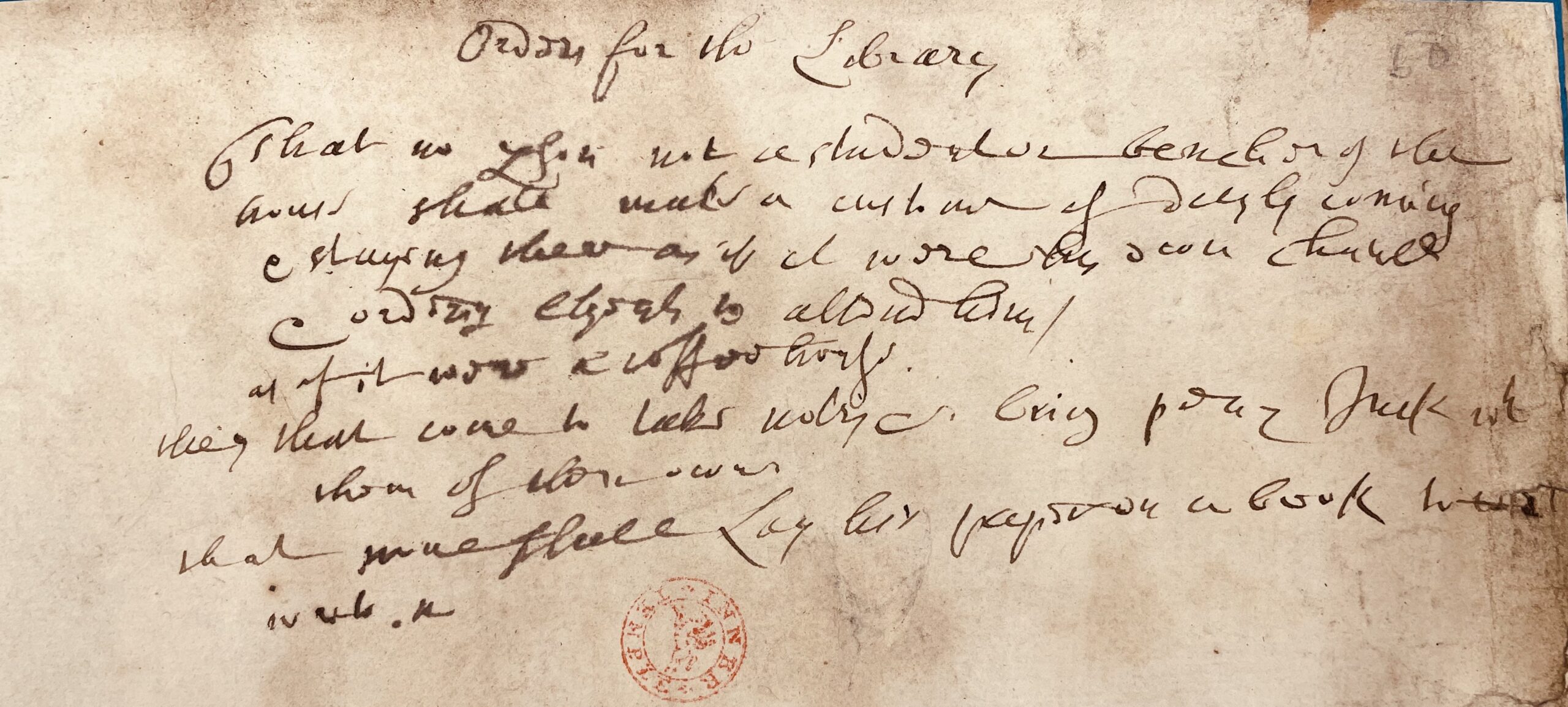
1713 – The earliest library catalogue was compiled by Samuel Carter (barrister, law reporter, and first Inner Temple Librarian). At the end of the catalogue, he decrees that
“No person not a student or bencher of the House shall make custom of daily coming and staying there as if it were his own chambers and ordering clients to attend him as if it were a coffee house.” [Misc. MS No. 4]
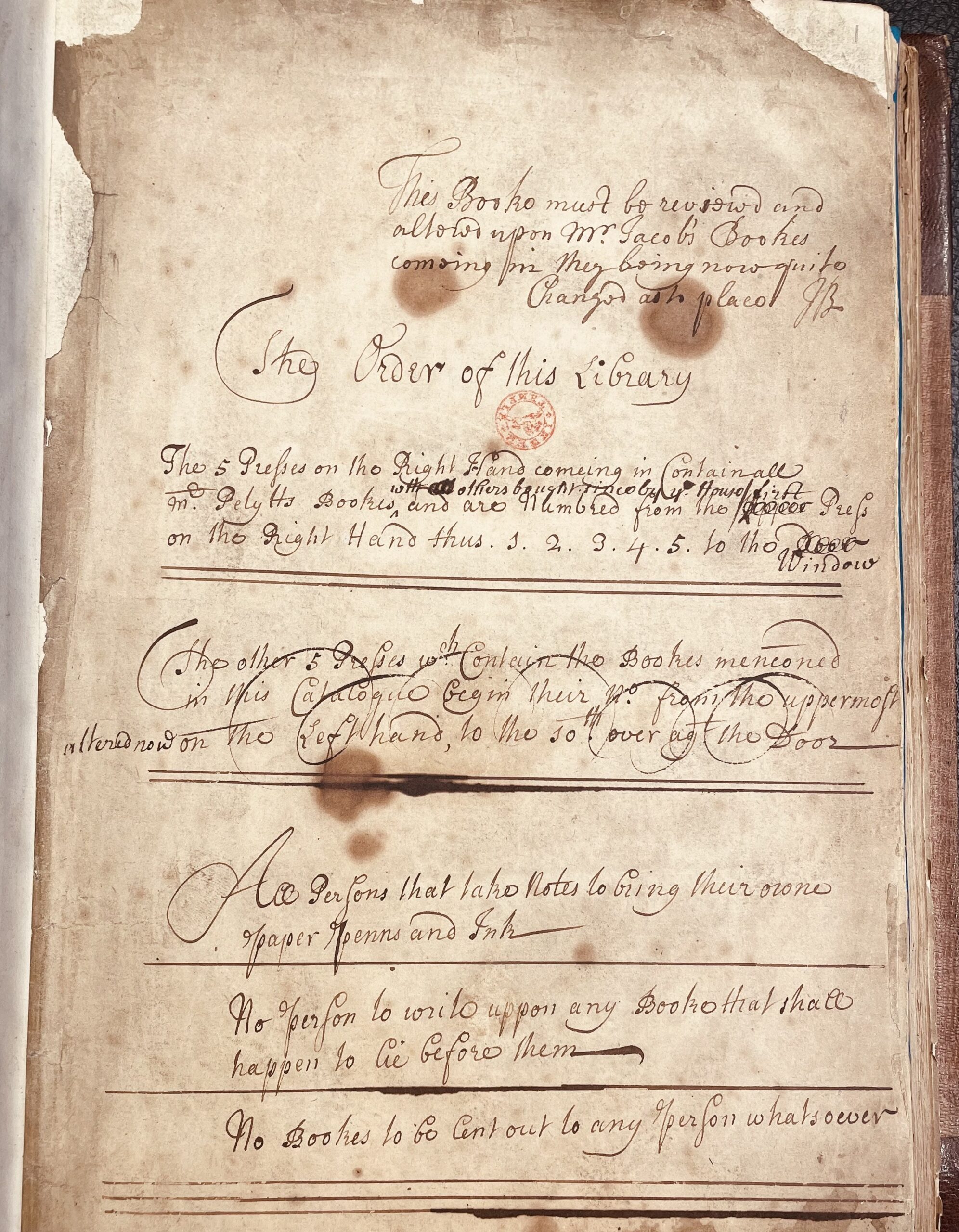
1715 – The next catalogue updated by Librarian and Chief Butler Joshua Blew is slightly more granular in the detail and feels surprisingly modern:
“All persons that take notes to bring their own paper, pens and ink”
“No person to write upon any book that shall happen to lie before them”
“No books to be lent out to any person whatsoever” [Misc. MS No. 4]
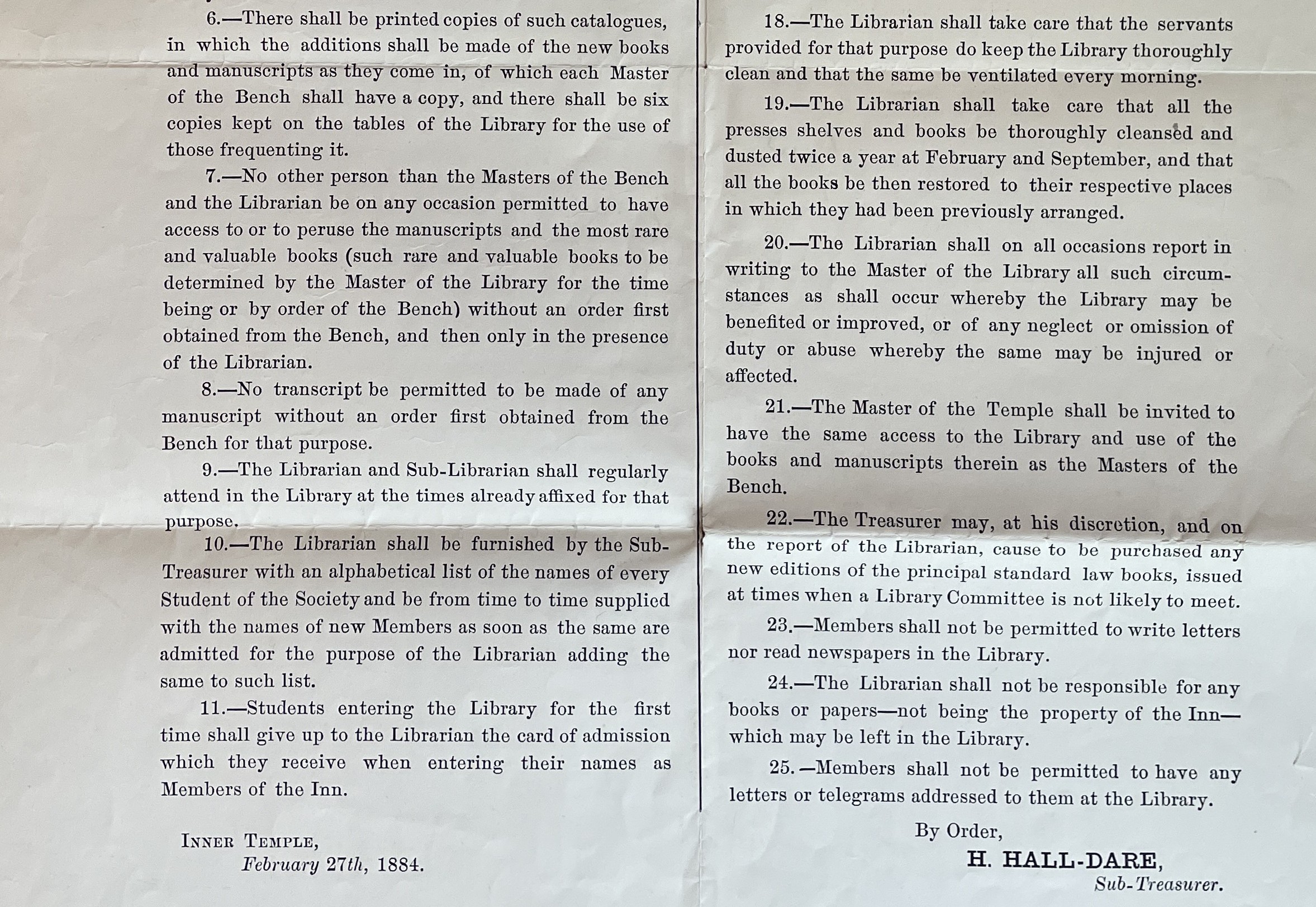
1884 – J.E.L Pickering’s Library tenure sees a dramatic U-turn related to the provision of ink. No more are you expected to bring your own, in fact the Librarian is ordered to keep reading desks supplied with ink. Beware, this is no community hub free for all library:
“members shall not be permitted to write letters nor read newspapers in the Library.”
1992 – Despite a warm summer, peaking at 31.5 oC (no records were broken), decency was maintained in the Library thanks to regulations enforcing appropriate attire:
“shorts or scanty clothing should not be worn”.
[Those who live in the now and want to know where they can take a phone call or whisper to a colleague in the 21st century library should consult the current Library Charter and Regulations.]
Pioneers and Revolutionaries at the Inner Temple
By Celia, Archivist
The Inner Temple Archive was delighted to mark the conclusion of South Asian History Month with Pioneers and Revolutionaries at the Inner Temple, an exhibition created in collaboration with , an MA student at King’s College London, through the King’s College/Inner Temple Archive and Library internship programme.
The exhibition explored the lives and achievements of South Asian members of the Inner Temple, highlighting the important role that legal education in England played in shaping political, social and professional life in South Asia during the late nineteenth and early twentieth centuries.
As Cynthia explains:
“I really enjoyed working with the Inner Temple on this project. The Inn’s archival records are exceptionally well preserved and provide an invaluable resource for researchers exploring the significant roles South Asians played in nationalist movements. Many South Asians came to England for legal training in the late nineteenth and early twentieth centuries, and an English legal education supported pioneering achievements across many fields. For nationalist activists, the law also became a powerful tool, equipping them with the knowledge to challenge the colonial system.”
The exhibition highlighted the lives of Inner Temple members:
- Reginald Walter Michael ‘Mickey’ Dias Bandaranaike (1921-2009) – Barrister and first Law Fellow of Magdalene College, Cambridge
- Liaquat Ali Khan (1895-1951) – First Prime Minister of Pakistan
- Hardit Singh Malik (1894-1985) – First Indian pilot in the Royal Flying Corps, and diplomat
- Bhicoo Batlivala (1910-1983) – First Indian woman called to the Bar at the Inner Temple
- Shyamji Krishnavarma (1857-1930) – Scholar and campaigner for Indian independence
- Ananda Mohan Bose (1847-1906) – Pioneering activist and social reformer
- Syed Ameer Ali (1849-1928) – Jurist and Muslim philosopher
- Mohandas Karamchand (‘Mahatma’) Gandhi (1869-1948) – Indian lawyer, politician, social activist and writer
Together, these stories demonstrate the diverse paths taken by South Asians who studied law in England and the far-reaching impact of their education.
The project reflects the Inner Temple’s ongoing commitment to celebrating the diversity of its historic membership and recognising those whose legal education helped shape history.